
Types of Luxembourg Investment Funds
UCITS: The Gold Standard for Retail Funds
When the average European investor buys an equity or bond fund, he’s probably buying a UCITS (Undertakings for Collective Investment in Transferable Securities, or, in French, organisme de placement collectif en valeurs mobilières). This is the most regulated, most restrictive, most protected type of fund in the European Union. And that’s precisely why it’s most popular with retail clients.
UCITS is an E.U. directive from nineteen-eighty-five—most recently amended as UCITS V in twenty-fourteen—that creates uniform rules for investment funds sold to consumers. UCITS’s key constraints are draconian:
Diversification: A maximum of ten per cent of fund assets may be invested in a single issuer’s securities. A maximum of forty per cent may go to issuances from the same capital group. This eliminates concentrated bets. A UCITS can’t be a fund investing solely in Apple stock, even if the manager believes Apple is the world’s best investment.
Liquidity: At least ninety per cent of assets must be liquid—sellable within seven days without significant value loss. This rules out investments in private equity, real estate, infrastructure, and illiquid debt. UCITS are funds for liquid markets.
Leverage: Limited to a hundred per cent of net asset value in collateralized borrowing, with more complex limits for derivative exposure. A UCITS can’t be a highly leveraged hedge fund.
Eligible assets: The list of qualifying assets is strictly defined—mainly public equities, government bonds, corporate bonds, money-market instruments, and transferable securities. Alternative investments generally don’t qualify.
Redemptions: An investor has the right to redeem units within a maximum of five business days, though the prospectus may specify longer periods while maintaining reasonable time frames.
Why such strict constraints? Because UCITS are sold to retail investors—people who often don’t understand financial-market intricacies and need protection from excessive risk. The regulator assumes that the average consumer can’t assess the risk of a concentrated portfolio or leveraged strategies, so it simply prohibits them.
For asset managers, UCITS represents frustrating limitations. You can’t make a concentrated bet on an undervalued sector. You can’t use significant leverage to amplify returns. You can’t invest in private markets, where real alpha gets generated.
But in return you get an E.U. passport—the ability to sell the fund throughout the European Union without separate registrations. That’s enormous value. The alternative? Establishing twenty-seven separate funds in each member state, or a notification process in every country where you want to distribute—which is slower, more expensive, and more complicated.
The numbers speak for themselves: As of June, 2025, Luxembourg funds managed 5.79 trillion euros. Most of that is UCITS. The UCITS sector has grown for decades because it offers something retail investors desperately need: regulatory comfort while maintaining access to professional management.
For American or Asian managers wanting to enter the European retail market, the math is simple: Establishing a Luxembourg UCITS provides access to hundreds of millions of potential clients. Structuring costs run a hundred thousand to two hundred thousand euros initially, plus two hundred thousand to four hundred thousand euros annually in operating expenses. For a fund with a five-hundred-million-euro target, these are costs that pay for themselves in the first year.
Alternative Investment Funds: Where the Real Fun Begins
If UCITS is a family sedan—safe, predictable, boring—then alternative investment funds (A.I.F.s) range from sports coupés through S.U.V.s to Formula One cars. Here, UCITS constraints vanish and possibilities multiply.
Part II funds are semi-regulated funds technically under CSSF supervision but with far greater freedom than UCITS. They can invest in a broader range of assets, employ higher leverage, and maintain more concentrated portfolios. They’re intended for sophisticated investors—institutions, family offices, high-net-worth individuals who understand risks.
The CSSF-approval process for a Part II fund is faster than for UCITS—typically two to three months versus three to four months for UCITS—but still requires regulatory scrutiny. The CSSF reviews the prospectus, investment policy, service providers, and management company. This isn’t a rubber stamp. Funds are sometimes rejected if the CSSF deems the structure too risky or the documentation insufficient.
The specialized investment fund (fonds d’investissement spécialisé, or SIF) represents the next level of sophistication. Created in two thousand and seven, the SIF is designed for well-informed investors—a definition encompassing institutional investors, financial-sector professionals, and individuals investing a minimum of a hundred and twenty-five thousand euros who confirm in writing that they understand the risks.
A SIF has virtually zero investment restrictions. It can invest in anything—real estate, private equity, hedge-fund strategies, commodities, art, wine, blockchain. It can use unlimited leverage. It can hold a hundred per cent of assets in a single issuer if the prospectus so provides.
The only real requirement is the risk-diversification principle: a SIF must diversify risk, though it faces no rigid limits like UCITS. In practice, for a private-equity fund investing in ten to fifteen companies over a ten-year life, this requirement is automatically satisfied.
CSSF approval for a SIF takes about three months. The subscription tax (taxe d’abonnement) is 0.01 per cent annually, compared with 0.05 per cent for UCITS and Part II funds—four times lower. For a billion-euro fund, that’s a four-hundred-thousand-euro annual difference.
The investment company in risk capital (société d’investissement en capital à risque, or SICAR) is a specialized structure for venture capital and private equity. A SICAR’s key feature is full exemption from capital-gains tax if at least seventy per cent of assets constitute risk capital—equity or quasi-equity in unlisted companies, or listed companies where the SICAR has significant influence.
For a private-equity fund investing in European-company buyouts, a SICAR structure means all profits from exits—I.P.O.s, trade sales, secondaries—are free of Luxembourg tax. Zero. With an average I.R.R. of fifteen to twenty per cent and a holding period of five to seven years, that’s an enormous difference in net returns for limited partners.
A SICAR can be organized as a corporation—a public limited company (société anonyme, or SA) or a partnership limited by shares (société en commandite par actions, or SCA)—or as a partnership: a common limited partnership (société en commandite simple, or SCS) or a special limited partnership (société en commandite spéciale, or SCSp). Most modern SICARs choose the SCSp, because it provides tax transparency. The SICAR itself doesn’t pay tax, since it’s transparent, and profits are taxed at the partner level according to their own jurisdictions. For American limited partners, this means they can treat the SCSp as a partnership for U.S. tax purposes, avoiding corporate-level taxation.
The RAIF: A Revolution in Launch Speed
Two thousand and sixteen brought the most important innovation in Luxembourg fund law in decades: the reserved alternative investment fund (fonds d’investissement alternatif réservé, or RAIF). The idea was simple but transformative. If we already have a regulated alternative-investment-fund manager supervised by the CSSF, why must the fund also undergo approval? Isn’t that a double layer of regulation adding time and cost without additional value?
The RAIF eliminates the requirement for CSSF approval of the fund. The fund manager selects a licensed alternative-investment-fund manager, prepares fund documentation, registers the RAIF with Luxembourg’s trade and companies register (Registre de Commerce et des Sociétés, or RCS), and can begin raising capital. The entire process often takes four to six weeks, versus three to four months for a SIF or SICAR.
For time-sensitive opportunities—say, a distressed-debt fund wanting to exploit a window during a credit crisis—those two to three months of time savings can mean the difference between success and a missed opportunity.
A RAIF can adopt the same legal forms as a SIF or SICAR: corporations, partnerships, or common funds (fonds commun de placement, or FCP). It can enjoy the same tax benefits: 0.01-per-cent subscription tax, tax neutrality on income and capital gains. The only difference is the absence of CSSF approval at the fund level, though the alternative-investment-fund manager managing the RAIF is fully regulated.
Since its introduction in twenty-sixteen, RAIFs have rapidly gained popularity, particularly in private equity and real estate. Flexibility plus speed is a combination that competing jurisdictions can’t easily replicate.
The Special Limited Partnership: Tax Transparency for Global Investors
The special limited partnership (SCSp) is a legal form introduced in twenty-thirteen that quickly became the preferred structure for international private-equity and real-estate funds in Luxembourg.
An SCSp is a contractual partnership without legal personality. This means the partnership itself isn’t a taxpayer—it’s transparent for tax purposes. All income and profits flow directly to partners, who settle up according to their own tax jurisdictions.
Why does this matter? Because it permits avoidance of corporate-level taxation and use of partners’ double-taxation-treaty networks instead of Luxembourg’s. An example:
Structure A—a Luxembourg SICAR as a public limited company:
Portfolio company pays dividend → SICAR receives (can recover withholding tax through Luxembourg double-taxation treaties) → SICAR pays no tax (exempt) → SICAR distributes to limited partners → partners pay tax in their jurisdictions.
Structure B—a Luxembourg SICAR as an SCSp:
Portfolio company pays dividend → flows through SCSp (tax-transparent) → limited partners receive directly → partners can use their own double-taxation treaties to reduce withholding tax.
For large institutional limited partners—pension funds, sovereign-wealth funds—Structure B is often preferred, because it gives them greater control and may result in lower withholding tax. A U.K. pension fund, for instance, might have a better double-taxation treaty with Germany than Luxembourg does.
An SCSp also offers advantages in flexibility. As a contractual structure, it can be customized almost without limits in the partnership agreement. Want special unit classes with different economic rights? Possible. Waterfall structures with multiple hurdles and catch-up provisions? Possible. Clawback mechanisms? Possible. Corporate forms have limitations stemming from company law; partnerships don’t.
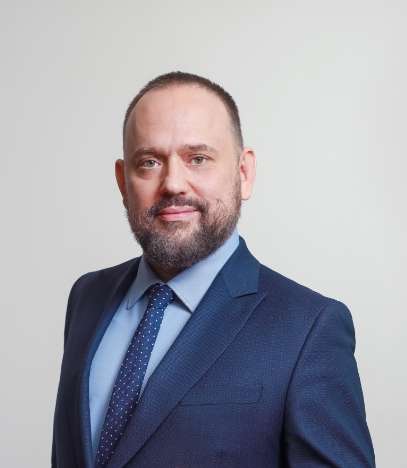
Robert Nogacki is a Polish attorney at law (radca prawny), the founder and managing partner of Kancelaria Prawna Skarbiec (Skarbiec Law Firm), which has operated continuously since 2006.
The law is equal for everyone, but the parties rarely are: on one side stands an organization with time, money, and lawyers, on the other a person with one business, one nest egg, and one life.
Clients rarely come to him with a legal problem. They come with a problem that also has a legal side: an audit that began with a single invoice, money entrusted to someone who has disappeared, a company that has to be passed on before it is too late. Most such matters are decided long before the first letter is written, in decisions made without asking and in deadlines nobody remembered. So he begins by asking how the client got here, not what the client should have done.
He advises entrepreneurs and families from more than a dozen countries, including those whose accounts the tax office has just seized and who do not know what to do tomorrow morning. He defends them in tax audits, customs and fiscal inspections, disputes with the tax authorities, and criminal tax proceedings. He represents victims of investment fraud and Ponzi schemes. He helps families set up family foundations and plan succession, so that a life’s work outlasts a single generation.
Not every case can be won. Every case can be run so that the client knows where they stand. Since 2006 he has represented the victims in the WGI case (Warszawska Grupa Inwestycyjna, the Warsaw Investment Group), one of the longest criminal cases in the history of the Polish financial market, because some things must not be left half finished, even when they take two decades. In the case of the collapsed cryptocurrency exchange Zonda (Zondacrypto, operated by BB Trade Estonia OÜ), he represents several hundred victims in the criminal investigation conducted by Poland’s National Prosecutor’s Office and in the Estonian bankruptcy proceedings.
Kancelaria Prawna Skarbiec is listed in the rankings of Poland’s largest tax advisory firms published by Dziennik Gazeta Prawna and Rzeczpospolita, and it is a four-time recipient (2015 to 2018) of the European Medal awarded by the Business Centre Club and the European Economic and Social Committee. Robert Nogacki publishes regularly, in the press and on the firm’s website, for people who have a problem rather than a law degree, because a legal opinion the client cannot understand protects only the lawyer.
He believes that the best legal advice is the kind that means the client never has to appear in court.